RSI Divergence AlertRSI Divergence Alert Input: range Bullish RSI Divergence yellow Bearish RSI Divergence red Pine Script® インジケーターjordan.fan.basketの投稿更新済 1190
08-2018 Stochastic 5m [ALERT SETUP] [INDICATOR]This is an accumulation of small buy orders and a complete sell order strategy, that can be used for manual trading or for a trading bot. The strategy is based on stockastic divergences ( an indicator that I made myself and is published on my profile earlier ), and I added my personnal touch of course. Note that the bullish and bearish stochastic divergences are calculated separately and can be configured in the inputs. To be used with a 5m timeframe, and on a flat or bullish pair. Everyone can favorite the script, apply it to the chart, but only I can see or modify the code. If you need anything, leave a comment, thanks :D More info about the script, such as inputs description, how to configure the script, strategy explanation, alert configuration can be found here : blockchainfiesta.com -------------------------------------------------------------------------------------------------------------- I do commission work: TradingView Pine Script development & Reverse Engineering. contact@blockchainfiesta.com. You can also send me a message in TradingView or Discord (discord.gg) Bitcoin address: 19sVQvCDmVfEACq7BiMnWSMqFPZ8qfSQ2K ETH address: 0xc8a5d3a63a05db0c2363ea1c08b37a01cce9ebfbPine Script® インジケーターcyatophilumの投稿95
RSI_EMA & Bearish EngulfingThis is a RSI-RSI of EMA and bearish candlestick reversal pattern formed by two candlesticks. Following an uptrend, the first candlestick is a up candlestick which is followed by a down candlestick which has a long real body that engulfs or contains the real body of the prior bar. following an uptrend, if RSI and EMA line cross then Sell and for downtrend if RSI and EMA line cross then Buy.Pine Script® インジケーターPremRajendraの投稿23
Stochastique Divergences IndicatorHello, I made a custom indicator. Divergences with stochastique and price are really strong signals. About the indicator A bullish divergence happens when the stoch K makes a higher low and is depicted by a green triangle up. A bearish divergence happens when the stoch K makes a lower high and is depicted by a red triangle down. This script is the base for my next strategy that I should upload soon. I will grant access (to this script and my others) to people willing to make a small donation. Here is my BTC address : 19sVQvCDmVfEACq7BiMnWSMqFPZ8qfSQ2K If you prefer ETH : 0xc8a5d3a63a05db0c2363ea1c08b37a01cce9ebfb Send me a Private Message with the ID of the transaction If you want to do some forward testing first, send me a message. Also check blockchainfiesta.comPine Script® インジケーターcyatophilumの投稿2244
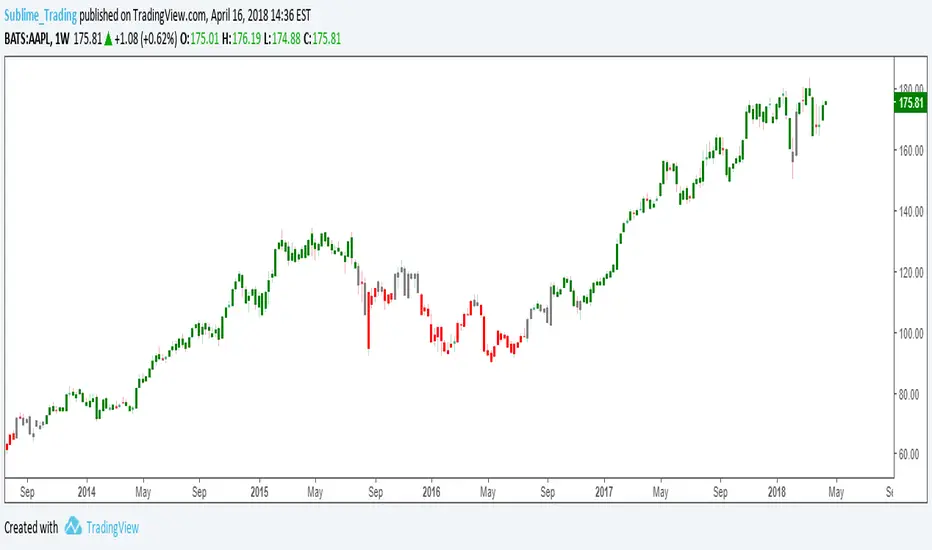
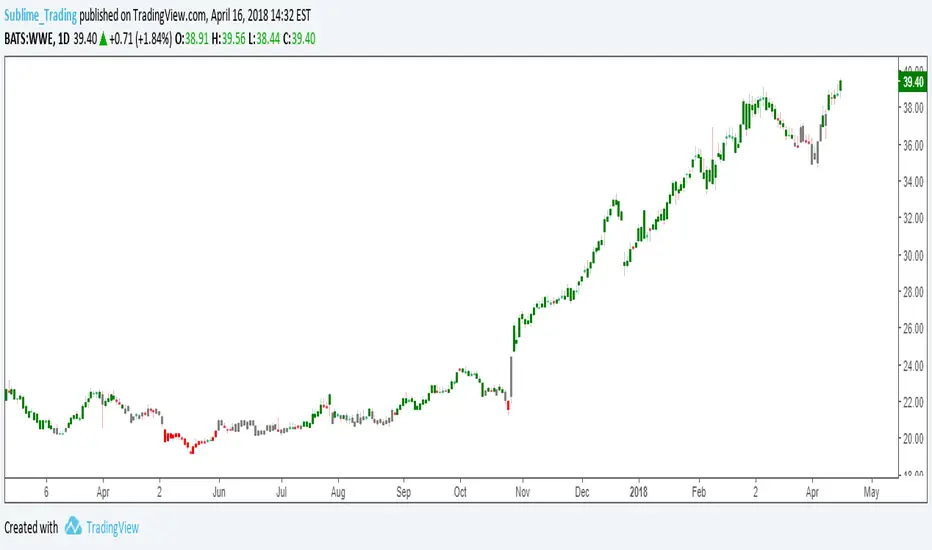
wTF50This is a customized trend filter that has several uses: It helps identify trend direction, either bullish or bearish It distinguishes between a pullback and a trend reversal It helps identify areas where traders should stand aside It highlights areas of consolidationPine Script® インジケーターSublime_Tradingの投稿6636
dTF50This is a customized trend filter that has several uses: It helps identify trend direction, either bullish or bearish It distinguishes between a pullback and a trend reversal It helps identify areas where traders should stand aside It highlights areas of consolidationPine Script® インジケーターSublime_Tradingの投稿2223
OBV divergence hidden and regular on both bearish and bullish.OBV (on balance volume) divergence indicator with hidden and regular signal on both bearish and bullish.Pine Script® インジケーターPatternsmartの投稿99123
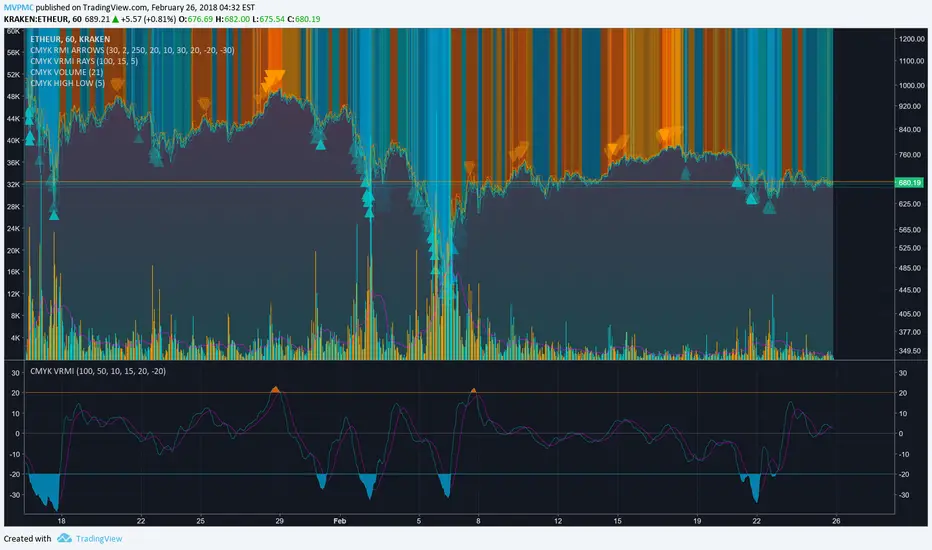
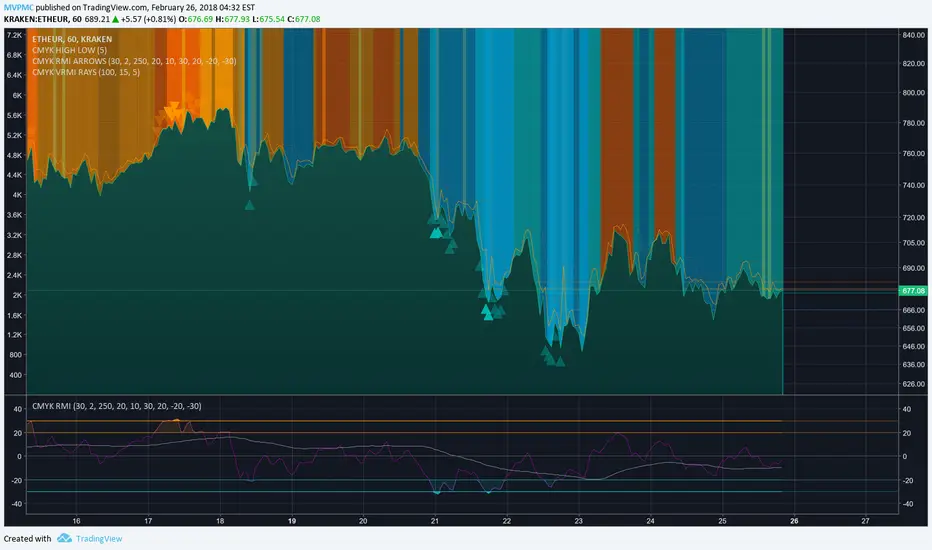
CMYK VRMI◊ Introduction This script indicates the relative movement of price x volume. ◊ Origin Based on 'The Relative Momentum Index' by Roger Altman : February, 1993 issue of Technical Analysis of Stocks & Commodities magazine. While RSI counts up and down days from close to close, the Relative Momentum Index counts up and down days from the close relative to a close x number of days ago. This results in an RSI that is smoother. The input has been changed to the change of a smoothed close multiplied by a smoothed volume. The polarity of VRMI indicates bearish/bullish movement. ◊ Adjustments CMYK color theme applied. ◊ Usage VRMI indicates the force the market moves with. ◊ Future Prospects - ◊ ◊ ◊ ◊ ◊ ◊ ◊ ◊ ◊ ◊ ◊ ◊ ◊ ◊ ◊ ◊ ◊ ◊ ◊ ◊ ◊ ◊ ◊ ◊ ◊ ◊ ◊ ◊ ◊ ◊ ◊ ◊ ◊ ◊ ◊ ◊ ◊ ◊ ◊ ◊ ◊ ◊ ◊ ◊ ◊ ◊ ◊ ◊ ◊ ◊ ◊ ◊ ◊ ◊ ◊ ◊ ◊ ◊ ◊ ◊ ◊ ◊ ◊ ◊ ◊ ◊ ◊ ◊ ◊ ◊ ◊ ◊ ◊ ◊ ◊ ◊ ◊ ◊ ◊ ◊ ◊ ◊ ◊ ◊ ◊ ◊ ◊ ◊ ◊ ◊ ◊ ◊ ◊ ◊ ◊ ◊ ◊ ◊ ◊ ◊ ◊ ◊ ◊ ◊ ◊ ◊Pine Script® インジケーターMVPMCの投稿113
CMYK VRMI RAYS ◊ Introduction Introducing VRMI in this script, an RMI based on price movement and volume, to indicate bullish and bearish trends. This script marks the background depending on RMI <> VRMI , VRMI polarity and large buy/sell sprees. ◊ Origin Based on 'The Relative Momentum Index' by Roger Altman : February, 1993 issue of Technical Analysis of Stocks & Commodities magazine. While RSI counts up and down days from close to close, the Relative Momentum Index counts up and down days from the close relative to a close x number of days ago. This results in an RSI that is smoother. In addition VRMI reacts quick, it is used to cut off latency from RMI, and it's polarity indicates the beginning and end of a trend. Large buy sell sprees and detected in their proportion with an sma on the volume ◊ Adjustments CMYK color theme applied. ◊ Usage This indicator can be used to detect trends and mark reversals. ◊ Prospects ◊ ◊ ◊ ◊ ◊ ◊ ◊ ◊ ◊ ◊ ◊ ◊ ◊ ◊ ◊ ◊ ◊ ◊ ◊ ◊ ◊ ◊ ◊ ◊ ◊ ◊ ◊ ◊ ◊ ◊ ◊ ◊ ◊ ◊ ◊ ◊ ◊ ◊ ◊ ◊ ◊ ◊ ◊ ◊ ◊ ◊ ◊ ◊ ◊ ◊ ◊ ◊ ◊ ◊ ◊ ◊ ◊ ◊ ◊ ◊ ◊ ◊ ◊ ◊ ◊ ◊ ◊ ◊ ◊ ◊ ◊ ◊ ◊ ◊ ◊ ◊ ◊ ◊ ◊ ◊ ◊ ◊ ◊ ◊ ◊ ◊ ◊ ◊ ◊ ◊ ◊ ◊ ◊ ◊ ◊ ◊ ◊ ◊ ◊ ◊ ◊ ◊ ◊ ◊ ◊ ◊ Pine Script® インジケーターMVPMCの投稿更新済 75
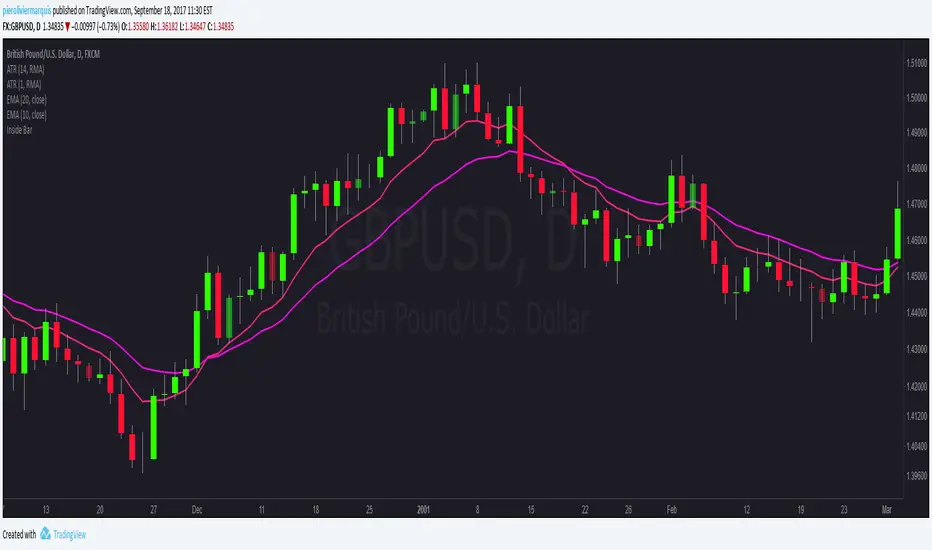
Inside Bar with bullish and bearish colorInside Bar with bullish and bearish colorPine Script® インジケーターpieroliviermarquisの投稿2222 1.2 K
Bullish and Bearish Engulfing Patterns auto detectionThis simple indicator detects automatically most important bullish and bearish candlestick patterns formations. Used to locate potential supply and demand imbalances. Copyright 2017 Alfonso Moreno www.set-and-forget.comPine Script® インジケーターAlfonsoMorenoの投稿5959 3.8 K
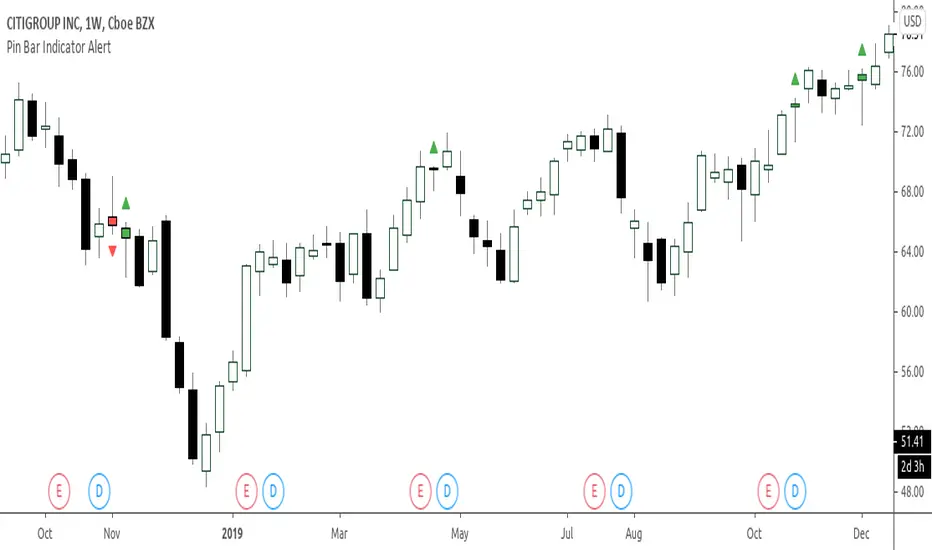
Pin barSource code that allows to find bullish or bearish pin bars in any asset.Pine Script® インジケーターcmaの投稿更新済 1111 1.8 K
Super Envolvente (Bullish y Bearish)Identificador de Super-envolventes (SE), se encarga de darle un color verde a la SE alzista (Bullish) verde y rojo a la bajista (Bearish). Pine Script® インジケーターcmaの投稿262
MaayaBearishPROD_v10_Nov2025bearish analysis bearish analysis bearish analysis bearish analysisPine Script® ストラテジーjithinlal4tradingの投稿1
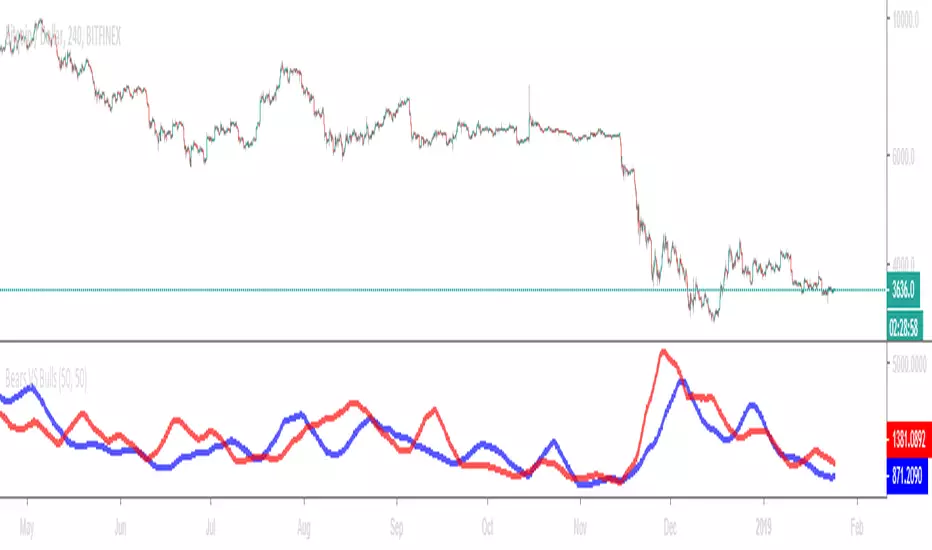
Bears VS BullsThis indicator will work on ANY instrument. The red line is a moving average of ONLY sellers in the market. The blue line is a moving average of ONLY buyers in the market. The period or "length" of the individual moving averages can be adjusted in the indicator settings. The default, it is set to 50. Buying and selling trends often provide indications of market moves such as the most recent bottom in Cryptocurrencies. Feel free to comment and share any indicator concepts or ideas for content you would like to see added to the Technical Indicator Bundle on www.kenzing.com Pine Script® インジケーターGrantPeaceの投稿更新済 141480
Bearish Trailing stopIt is a trailing SL. Works very well. Good good very good. Looks like my description needs more, so here is more random text.Pine Script® インジケーターTimeFractの投稿3
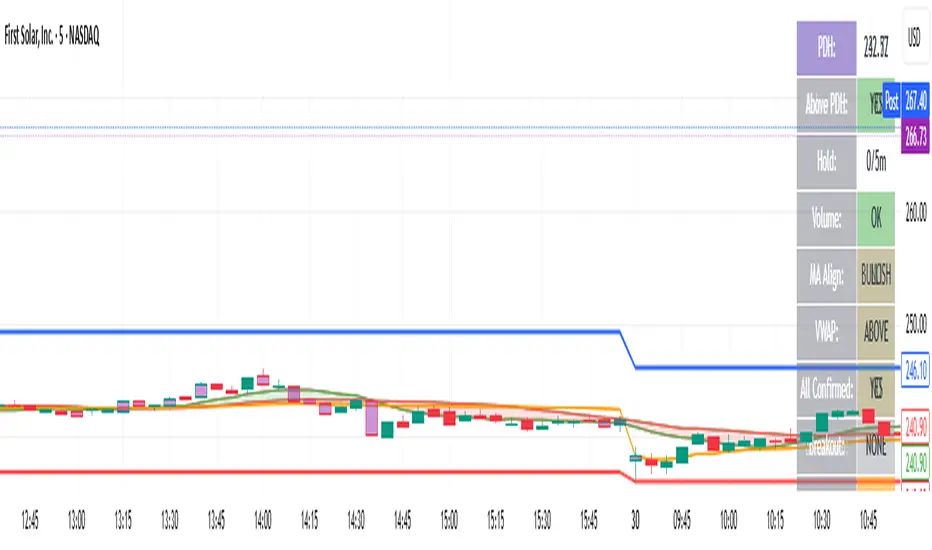
bearish Price Below PDL - Complete Multi-Confirmation Alert🎯 KEY IMPROVEMENTS: 1. Enhanced Alert Visibility:$jmoskyhigh ✅ HUGE triangle down marker with "SELL" text ✅ Alert title: "SELL SIGNAL - PDL BREAKDOWN CONFIRMED" ✅ Prominent info panel with red theme ✅ Clear "SELL ALERT: TRIGGERED" status 2. Better Visual Feedback: Red frame around info panel Larger shapes and markers Color-coded confirmations (green = OK, red = FAIL) Progress percentage displayed Breakdown price label 3. Complete Alert System: Main Alert: "SELL SIGNAL - PDL BREAKDOWN CONFIRMED" Early Warning: "PDL Breakdown Started - Monitoring" Reset Alert: "Confirmation Lost - Breakdown Reset"Pine Script® インジケーターjmslimusの投稿4
Bearish 1st Breakaway SLInspried by DeLeBlanc Bullish 1st Breakaway StoplossPine Script® インジケーターhoakhanh1976の投稿8849
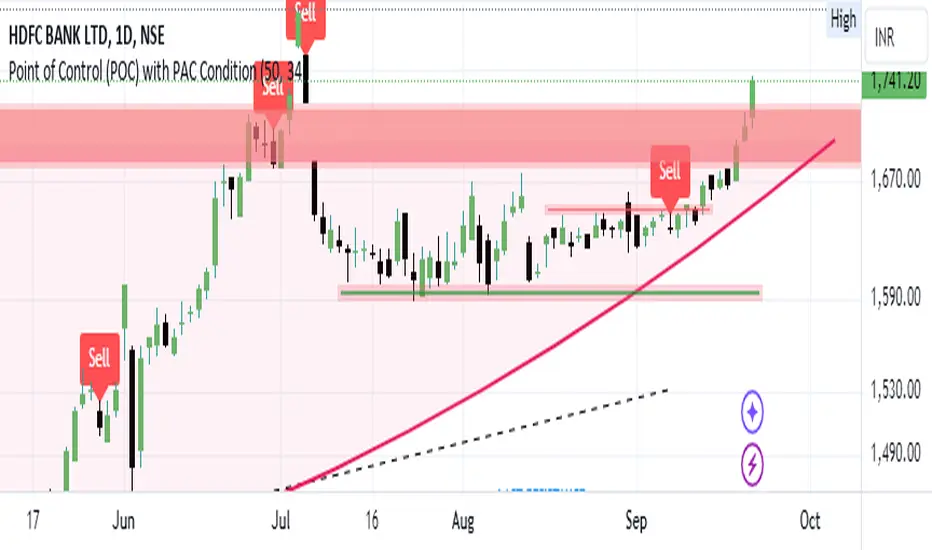
Bearish signal using Point of Control (POC) with PAC by guruThis indicator code helps traders identify potential sell opportunities using several important technical indicators: Point of Control (POC) – This is the price level where the most volume was traded over the past several days. Previous Day's Low – This shows the lowest price reached during the previous day. PAC (Price Action Channel) EMA – These are two moving averages (one based on the low price and one based on the close price) that help determine if the price is trending within a certain range. Volume SMA – This is a 3-day simple moving average (SMA) of volume, which helps filter out signals based on market activity. What the Script Does: Point of Control (POC): The script looks at the last 50 days (configurable) and calculates which price level had the highest trading volume. It then plots a red line on the chart at the POC level. This is important because it helps identify areas where there was strong market interest in the past. Volume Moving Average: The script calculates a 3-day SMA of volume, but it excludes the current day to avoid premature signals based on today’s trading. The volume SMA is used to ensure there’s enough market activity (with a threshold set to 25 units) before triggering a sell signal. Price Action Channel (PAC) EMA: The PAC consists of two exponential moving averages (EMAs): The PAC Low EMA: This is based on the low prices over the last 34 periods (configurable). The PAC Close EMA: This is based on the closing prices over the last 34 periods. These EMAs help determine if the price is trending above or below certain price levels. Sell Signal Logic: The script checks three conditions before displaying a "Sell" signal: Price Below POC and Previous Day’s Low: The close price must be below both the Point of Control (POC) and the previous day's low. Volume SMA Above 25: The 3-day volume SMA must be greater than 25. This ensures the signal only triggers when there’s enough trading volume in the market. Today’s Low is Above PAC EMAs: Today's low price must be above both the PAC low EMA and the PAC close EMA. This prevents sell signals when prices are already significantly below the PAC, indicating possible exhaustion in the downtrend. If all three conditions are met, the script will display a red "Sell" label on the chart, signaling a potential selling opportunity. No Sell Signal if Price Reverses: If the price crosses back above the POC or the previous day's low, the script will remove the sell signal and reset for a new opportunity. Summary of Conditions: For the script to display a "Sell" label: The close price must be below the Point of Control (POC) and the previous day’s low. The 3-day volume SMA (excluding today) must be greater than 25 units. The low price of the current day must be above both the PAC low EMA and the PAC close EMA. If these conditions are met, a red sell label appears on the chart as a potential signal for a short (sell) trade.Pine Script® インジケーターGuru7208の投稿2121245
Bearish FS Continuation S1BB - baby bar / inside bar DF - downflow, meaning 20MA below 50MA EXE - execution bar, indicator to short Mainly to identify execution bar for shorting using inside bar identification and force topPine Script® ストラテジーvinniechase89の投稿19
Guneet-ScalperBearish trend candle color change to red with sell print Bullish trend candle color change to green with buy print thanks jas toorPine Script® インジケーターjastoorの投稿1111106
Multi-Timeframe C2/C3 Suite█ OVERVIEW The Multi-Timeframe C2/C3 Suite is a closure-based pattern detection system that identifies potential reversal formations on 4H and 1H timeframes. This indicator exclusively uses candle closures to detect pattern formations. The system detects 14 distinct pattern types organized into two families: • C2 Patterns (8 types): Detected when a candle tests a previous candle's extreme and closes back inside its range • C3 Patterns (6 types): Detected when price recovers after breaking a previous candle's range Each pattern type is classified by signal strength (Ideal → Type 1 → Type 2 → Indecision), giving traders granular control over which signals to monitor. █ PATTERN METHODOLOGY The indicator uses a consistent 3-candle naming convention: • C1: Reference candle establishing the range to be tested • C2: Test candle that probes C1's extreme and closes back inside • C3: Confirmation candle that recovers after C2 breaks C1's range ▌C2 PATTERNS C2 patterns form when: 1. C2 trades to (or through) C1's high or low 2. C2 closes back INSIDE C1's range The pattern type depends on HOW C2 closes: • C2 Ideal Bullish: Tests C1's low, closes inside, AND closes above C1's open. • C2 Ideal Bearish: Tests C1's high, closes inside, AND closes below C1's open. • C2 Type 1 Bullish: Tests C1's low, closes inside, closes bullish (close > open). • C2 Type 1 Bearish: Tests C1's high, closes inside, closes bearish (close < open). • C2 Type 2 Bullish: Tests C1's low, closes inside, but closes bearish. • C2 Type 2 Bearish: Tests C1's high, closes inside, but closes bullish. • Indecision Bullish: Tests C1's low, closes inside, open ≈ close (doji-like). • Indecision Bearish: Tests C1's high, closes inside, open ≈ close (doji-like). ▌C3 PATTERNS C3 patterns form when: 1. C2 closes OUTSIDE C1's range 2. C3 closes back past C2's open AND closes in the confirming direction The pattern type depends on C3's relationship to C2's range: • C3 Ideal Bullish: C3 tests C2's low AND closes back past C2's open. • C3 Ideal Bearish: C3 tests C2's high AND closes back past C2's open. • C3 Type 1 Bullish: Pure C3 close with no C2 component on C3 candle. C3 doesn't test C2's extremes. • C3 Type 1 Bearish: Pure C3 close with no C2 component on C3 candle. C3 doesn't test C2's extremes. • C3 Type 2 Bullish: C3 closes back but tests C2's HIGH. C3 has conflicting C2 pattern (opposite direction tested). • C3 Type 2 Bearish: C3 closes back but tests C2's LOW (opposite direction). C3 has conflicting C2 pattern (opposite direction tested) ▌EDGE CASE HANDLING The indicator handles ambiguous scenarios systematically: • Dual-Side Test: When C2 tests BOTH C1's high AND low, the pattern direction is determined by C2's closing direction (bullish close = bullish pattern). If C2 closes as indecision (open ≈ close), no pattern is generated. • C3 Validation: C3 must close in the pattern's direction to be valid. A bullish C3 must close bullish (close > open), and vice versa. • Boundary Conditions: Range tests use inclusive comparisons (>= and <=), so exact touches of C1's high/low count as tests. █ MULTI-TIMEFRAME ARCHITECTURE The indicator independently tracks patterns on two timeframes: • 4H Patterns: Detected on the 4-hour timeframe, visible on 4H charts and all lower timeframes • 1H Patterns: Detected on the 1-hour timeframe, visible on 1H charts and all lower timeframes When viewing on lower timeframes (e.g., 15m or 5m), the indicator fetches higher-timeframe data and places labels at the middle of the HTF candle's bar range, with the Y coordinate set to the pattern's extreme price (lowest low for bullish, highest high for bearish). ▌LABEL OVERLAP PREVENTION & COLLISION HANDLING The indicator manages label overlaps through two mechanisms: • Smart Merging: When 4H and 1H patterns occur at the same bar with the same direction, labels are merged into a single combined label displaying both pattern codes. • Collision Management: When 4H and 1H labels would visually overlap but are on different bars, the 1H label is offset vertically to prevent occlusion. The 4H label maintains its position (higher timeframe priority). █ FEATURES ▌PATTERN LABELS • Color-coded labels: Green (bullish), Red (bearish), Gray (indecision) • Configurable transparency and offset from price • Individual enable/disable toggles for all 14 pattern types • Separate visibility controls for 4H and 1H patterns ▌FORMATION SEPARATORS • Vertical separator lines mark the candle boundaries of detected formations • C2 patterns show: C1 start → C2 start → C3 start (next candle) • C3 patterns show: C1 start → C2 start → C3 start → C4 start • Optional range labels ("C1", "C2") at candle extremes • Auto-delete after configurable number of candles • Customizable line style, color, and width ▌STATISTICS ENGINE • Time-slot analytics: Patterns indexed by hour:minute in your selected timezone • Tracks historical performance for each pattern type at each time slot • Displays when the active pattern is pending confirmation Tracked metrics include: ─ Base count: Total occurrences of the pattern at this time slot ─ Traded: How often the next candle traded to the signal candle's extreme ─ Closed: How often the next candle closed past the signal candle's extreme ─ C1 Scenarios: Breakdown by whether the signal candle tested C1's opposite extreme ─ C2 Scenarios (C3 patterns only): Breakdown by C3's relationship to C2's opposite extreme IMPORTANT: The historical depth of statistics depends on your chart's current timeframe and your TradingView data plan. Lower timeframes provide less historical data. For maximum statistical depth, view the indicator on 4H or 1H charts. ▌ALERTS • Fires alerts on new pattern detection • Alert message includes: pattern name, timeframe, and formatted time • Respects your individual pattern enable/disable settings • Single alert condition covers all enabled patterns █ HOW TO USE 1. Add the indicator to any chart at 4H timeframe or lower 2. Configure which patterns to display: • In Settings → "C2 Pattern Labels" and "C3 Pattern Labels" groups • Enable patterns you want to track, disable others • Use "Label Visibility" to toggle entire timeframes on/off 3. Interpret the signals: • Labels appear at the signal candle's extreme (low for bullish, high for bearish) 4. Use the formation separators: • Enable "Show Formation Separators" in Settings • Vertical lines help visualize the C1-C2-C3 structure • Useful for understanding pattern context 5. Review statistics: • Enable "Show Statistics Table" in Settings • View historical performance for the current pending pattern • Use "Display Timezone" to match your trading hours • Navigate to higher timeframes for deeper historical data 6. Set up alerts: • Enable "Enable Alerts" in Settings • Create an alert on this indicator with "Any alert() function call" • Receive notifications when new patterns form █ CONFIGURATION OPTIONS ▌LABEL SETTINGS • Show 4H Labels / Show 1H Labels: Master toggles for each timeframe • Individual pattern toggles: 14 separate enable/disable options • Label Colors: Bullish, Bearish, Indecision colors with transparency • Label Offset: Distance from price ▌SEPARATOR SETTINGS • Show Formation Separators: Master toggle for separator lines • Show Range Labels: Display "C1", "C2" text at candle extremes • Auto-Delete After: Number of candles before separators disappear • Line Style: Solid, Dashed, or Dotted • Line Color and Width: Visual customization ▌STATISTICS SETTINGS • Show Statistics Table: Enable/disable the statistics display • Display Timezone: 13 timezone options for time-slot indexing • Text Color, Size, Background: Visual customization ▌PATTERN DETECTION • Indecision Tolerance: Threshold for open ≈ close detection (in ticks) █ NOTES • Non-Repainting: All pattern detection occurs on confirmed candle closes only. Labels may update position intra-bar on lower timeframes (tracking the extreme), but pattern detection itself does not repaint. • Resource Efficient: The indicator fetches HTF data in optimized batches and manages line/label objects within TradingView's limits. • This indicator is for educational puproses only and is not intended to constitute financial advice to any person.Pine Script® インジケーターMr_NSFTの投稿2
PrecisionCombo v4.1PrecisionCombo is a multi-signal momentum and trend system built for intraday traders who want clear, actionable entries backed by multiple layers of confirmation. It layers two independent engines — a Trend Engine and a Breakout Engine — on the same chart so you can see at a glance whether a move has both directional structure and real momentum behind it. HOW IT WORKS PrecisionCombo layers two independent engines — a Trend Engine and a Breakout Engine — on the same chart. Each engine runs its own calculations and generates its own signals. The Trend Engine tells you the direction. The Breakout Engine tells you the conviction. Neither one alone gives you the full picture — direction without conviction gets you in too early, conviction without direction gets you in on the wrong side. By reading both engines together, you see at a glance whether a move has both structural trend support and real momentum behind it, or whether one side is missing. Trend Engine — Identifies the prevailing trend direction using an adaptive smoothed average system that adjusts to volatility. The header displays the current wave state (BULLISH WAVE or BEARISH WAVE) along with the structural trend direction (TREND: UP or TREND: DOWN) so you always know which side of the market is in control. A built-in chop filter detects sideways, oscillating price action and suppresses signals during those conditions — keeping you out of the environments that destroy edge. Breakout Engine — Measures breakout conviction through a multi-factor scoring system. It evaluates range expansion relative to recent ATR, impulse strength, trail separation distance, and liquidity conditions (relative volume and dollar volume thresholds). The result is a real-time Breakout Strength percentage (0–100%) displayed in the header. Higher values mean stronger participation behind the move. This helps you distinguish between a genuine breakout with follow-through potential and a low-energy drift that is likely to fail. Signal Generation — Each engine generates its own signals based on its own conditions. The Trend Engine produces structural signals (B, S, BO, BD) when trend direction and price structure confirm. The Breakout Engine produces momentum signals (triangles, dots, arrows) when volume, momentum scoring, and trend smoothing confirm. When both engines are firing signals in the same direction on the same chart, that is confluence — the setup has both directional structure and momentum conviction supporting it. Wave Candle Painting — Candles are painted based on the Trend Engine's momentum read. Green candles indicate bullish wave momentum is in control; red candles indicate bearish wave momentum. Signal events override wave colors — Breakout forces green, Breakdown forces red. This gives you an instant visual read on who is winning without checking any label. TWO ENGINES, ONE SYSTEM PrecisionCombo is built on two separate engines that generate their own signals independently. The power comes from watching how they interact and confirm each other. Trend Engine Signals: B (Green Label) — Structural trend flip bullish. The Trend Engine has confirmed a shift from bearish to bullish structure. This is a directional signal — the underlying trend has changed. S (Red Label) — Structural trend flip bearish. The Trend Engine has confirmed a shift from bullish to bearish structure. If you are long, this is your structural warning. BO (Cyan Label) — Bullish breakout. Price has broken above a prior range high with impulse confirmation, range expansion, trail separation, and sufficient liquidity. This is the strongest bullish signal the system produces. When BO fires, it means every gate has been passed — trend, impulse, expansion, and liquidity are all confirmed. This is the primary entry signal. BD (Magenta Label) — Bearish breakdown. The mirror of BO to the downside. Same multi-factor confirmation required. Strongest bearish signal. Breakout Engine Signals: White Triangles (Up) — Early momentum detection. The Breakout Engine senses rising pressure before a full signal triggers. These are awareness signals — something is building. Green Dots — Breakout quality confirmed. The momentum pulse score and volume conditions have cleared the threshold. Use these as confirmation that the move has substance, or as add-to points during an active trade. Green Arrow (Up) — Momentum entry. The Breakout Engine's trend smoothing and volume conditions have aligned bullish. Red Arrow (Down) — Momentum exit. The trend smoothing average has flipped, ending the momentum trade. Yellow Arrow (Down) — Fast exit. An early warning that fires when the fast Hull average flips while you are still in profit. This lets you lock in gains before the full exit triggers. Each signal from both engines requires multiple independent conditions to agree before it prints. No single factor can trigger any signal on its own. WHAT MAKES IT DIFFERENT PrecisionCombo is not a moving average crossover, an RSI threshold, or a repainted arrow indicator. Every signal requires multiple independent conditions to agree before it prints. The system is built on the principle that no single indicator is reliable on its own — but when several unrelated measures point the same direction at the same time, the probability of follow-through increases significantly. The two-engine architecture gives you something most indicators do not — two independent perspectives on the same price action. The Trend Engine reads structure and direction. The Breakout Engine reads momentum, volume, and conviction. When both engines are signaling the same direction at the same time (for example, a B fires and green dots are stacking), you know the setup has both structural and momentum support. When only one engine is firing, that is useful information too — it tells you something is missing. The Breakout Strength percentage adds another dimension. A signal at 73% strength is a very different trade than one at 25%. You can see conviction before you commit capital. The reason these two engines belong on the same chart is simple: a trend signal without momentum confirmation leaves you guessing about timing and conviction. A momentum signal without trend context leaves you guessing about direction. Together, they give you both — and you can see it all without switching between multiple indicators or second-guessing conflicting signals from separate tools. HOW I LIKE TO USE IT Best used with a screener that scans for breakout/momentum candidates. Once you find a chart that looks good, look for the BO signal as your primary entry. If the move continues to look strong, the green dots give you opportunities to add to your position. Due to the indicator having two separate engines, there are multiple buy and sell opportunities and they come earlier or later depending on price action. I recently added the yellow early exit arrow because I wanted to give myself and other traders a chance to get out early and take profit rather than waiting for the full exit signal. If you look at enough charts, you will notice a real gem of a warning: watch the white triangles and green dots trending upward during a breakout. When they stop appearing, the momentum is fading — best to take profit or step aside and wait for the next setup. INPUTS All parameters are configurable. Key inputs include sensitivity adjustment, breakout ATR multipliers, trail separation distance, pulse threshold, dollar volume minimum, momentum smoothing lengths, and chop filter toggle. Default settings are optimized for small-cap momentum stocks on the 5-minute timeframe but work across instruments and timeframes with adjustment.Pine Script® インジケーターMohaveTraderの投稿1